Short answer: On July 24, 2026, bitcoin slipped to about $64,300 as new U.S. tariffs on 60 economies took effect and the 10-year Treasury yield sat near 4.71%, its highest in 18 months. Spot bitcoin ETFs had just posted a $225 million net outflow, ending a weeklong inflow streak, a sign that rising bond yields were pulling institutional money away from crypto.
What happened
Bitcoin (BTC) opened Friday, July 24, 2026 at about $65,050, roughly 1.6% below Thursday's open, and traded near $64,300 by mid-morning in New York. Ether (ETH) fell about 2.9% to around $1,860. The Crypto Fear & Greed Index dropped to 28, in "fear" territory.
Three pressures lined up on the same day:
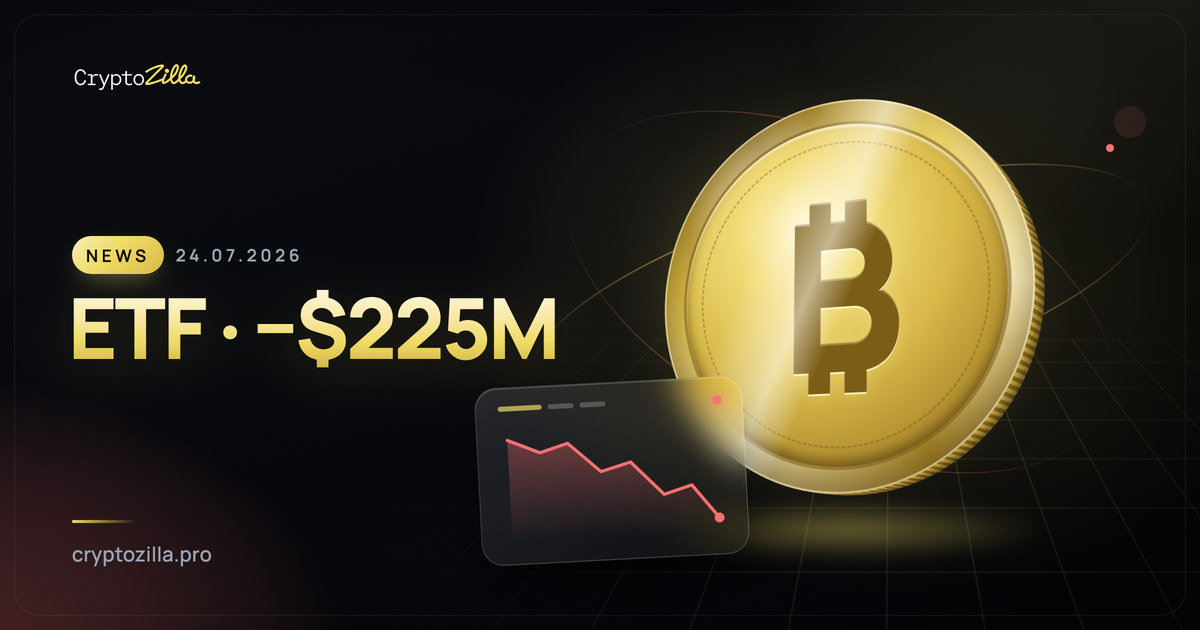
- ETF outflows. U.S. spot bitcoin exchange-traded funds (ETFs) recorded a net outflow of about $225 million on Thursday, July 23. BlackRock's iShares Bitcoin Trust (IBIT) accounted for roughly $202 million of it. The outflow ended a weeklong run of inflows worth close to $1 billion.
- Higher yields. The 10-year U.S. Treasury yield reached about 4.71%, an 18-month high, with long-dated yields also climbing. Higher oil prices linked to the U.S.–Iran conflict fed inflation worries and talk that the Federal Reserve might have to raise rates.
- Tariffs. At 12:01 a.m. ET on July 24, new tariffs of 10% to 12.5% on imports from 60 trading partners took effect under Section 301 of the Trade Act of 1974. Those 60 economies supply about 99% of U.S. imports, though some goods such as oil and gas are exempt.
Tech stocks set the tone: the Nasdaq Composite fell about 2.2% on July 23, and bitcoin, which has traded closely with growth stocks this year, followed.
Why rising Treasury yields hurt bitcoin
Bitcoin pays no interest. When a 10-year U.S. government bond yields over 4.7% with almost no credit risk, the opportunity cost of holding a volatile, non-yielding asset rises. Large allocators such as pension funds, advisers and hedge funds compare returns across assets, and spot bitcoin ETFs make it easy for them to rotate out in a single trade. That is why ETF flows have become one of the fastest gauges of institutional sentiment.
Inflation expectations matter too. Tariffs raise import prices and higher oil feeds into transport and energy costs. If markets expect more inflation, they price in a tighter Fed, and liquidity-sensitive assets, crypto included, usually weaken first.
How the new tariffs differ from earlier ones
The U.S. Supreme Court struck down the administration's earlier tariffs imposed under the International Emergency Economic Powers Act (IEEPA) in February 2026. The White House then used a temporary 10% global tariff under Section 122 of the Trade Act, which is limited to 150 days. The July 24 package replaces it with a Section 301 action, justified by trade partners' weak enforcement of bans on goods made with forced labor.
| Indicator | Level around July 23–24, 2026 | Why it matters for crypto |
|---|---|---|
| Bitcoin price | About $64,300 (July 24, morning ET) | Roughly half its October 2025 record of about $126,000 |
| Spot BTC ETF flows | −$225 million (July 23) | First outflow after about $1 billion of inflows in a week |
| 10-year Treasury yield | About 4.71% | Highest in 18 months; raises the cost of holding non-yielding assets |
| New U.S. tariffs | 10%–12.5% on 60 economies | Adds to inflation expectations and rate-hike risk |
| Fear & Greed Index | 28 | Sentiment firmly in "fear" |
Crypto-specific news did not help either. Two days earlier, a new Senate draft of the CLARITY Act market structure bill drew objections from Democrats and banks, lowering hopes of passage before the August recess.
What it means for you
A macro-driven pullback is different from a crypto-specific crash: nothing broke on-chain, and the moves were modest. But it shows how much bitcoin now reacts to bond markets, tariffs and ETF flows.
- Watch macro dates. Inflation data, Fed meetings and Treasury auctions can move crypto as much as industry news.
- Keep leverage low. Moves of 3–5% in a day are routine in this environment and can liquidate high-leverage positions.
- Use stablecoins deliberately. If you want to reduce exposure, a stablecoin keeps you on-chain, but it does not earn the yield a Treasury bill pays, and each issuer carries its own risk. Our explainer on what a stablecoin is covers the trade-offs.
- Do not read one day of ETF flows as a trend. Flows swing with bond markets; several weeks of data say more than a single session.
None of this is a forecast. Yields can reverse as quickly as they rose, and ETF flows have flipped direction many times since the funds launched in January 2024.
Key takeaways
- Bitcoin traded near $64,300 on July 24, 2026, down about 1.6% from the previous open.
- Spot bitcoin ETFs saw a $225 million net outflow on July 23, led by BlackRock's IBIT.
- The 10-year Treasury yield hit about 4.71%, an 18-month high.
- Section 301 tariffs of 10%–12.5% on 60 economies took effect on July 24.
If you plan to move part of a position into USDT or USDC while markets are jumpy, check the full route and fees first; our guide on how to swap bitcoin to USDT walks through it step by step.
Sources: Yahoo Finance, CoinGape, KuCoin News, Fortune
Frequently asked questions
Why did bitcoin fall on July 24, 2026?
Mainly macro pressure: the 10-year Treasury yield reached an 18-month high near 4.71%, new U.S. tariffs on 60 economies took effect, and spot bitcoin ETFs recorded a $225 million outflow the day before. Bitcoin slipped to about $64,300.
How do Treasury yields affect the bitcoin price?
Higher yields make low-risk government bonds more attractive compared with assets that pay no interest, such as bitcoin. Institutional investors often shift money toward bonds when yields rise, which tends to show up as ETF outflows.
What are the Section 301 tariffs that started on July 24, 2026?
They are U.S. import duties of 10% to 12.5% on goods from 60 trading partners, imposed under Section 301 of the Trade Act of 1974 over weak enforcement of forced-labor import bans. They replaced a temporary 10% global tariff after the Supreme Court struck down earlier IEEPA tariffs in February 2026.